Pork BellySSAM
Story Behind the Plate
A Korean way of eating, rebuilt through slow cooking, crisp texture, bright acidity — and a final layer completed by the guest.
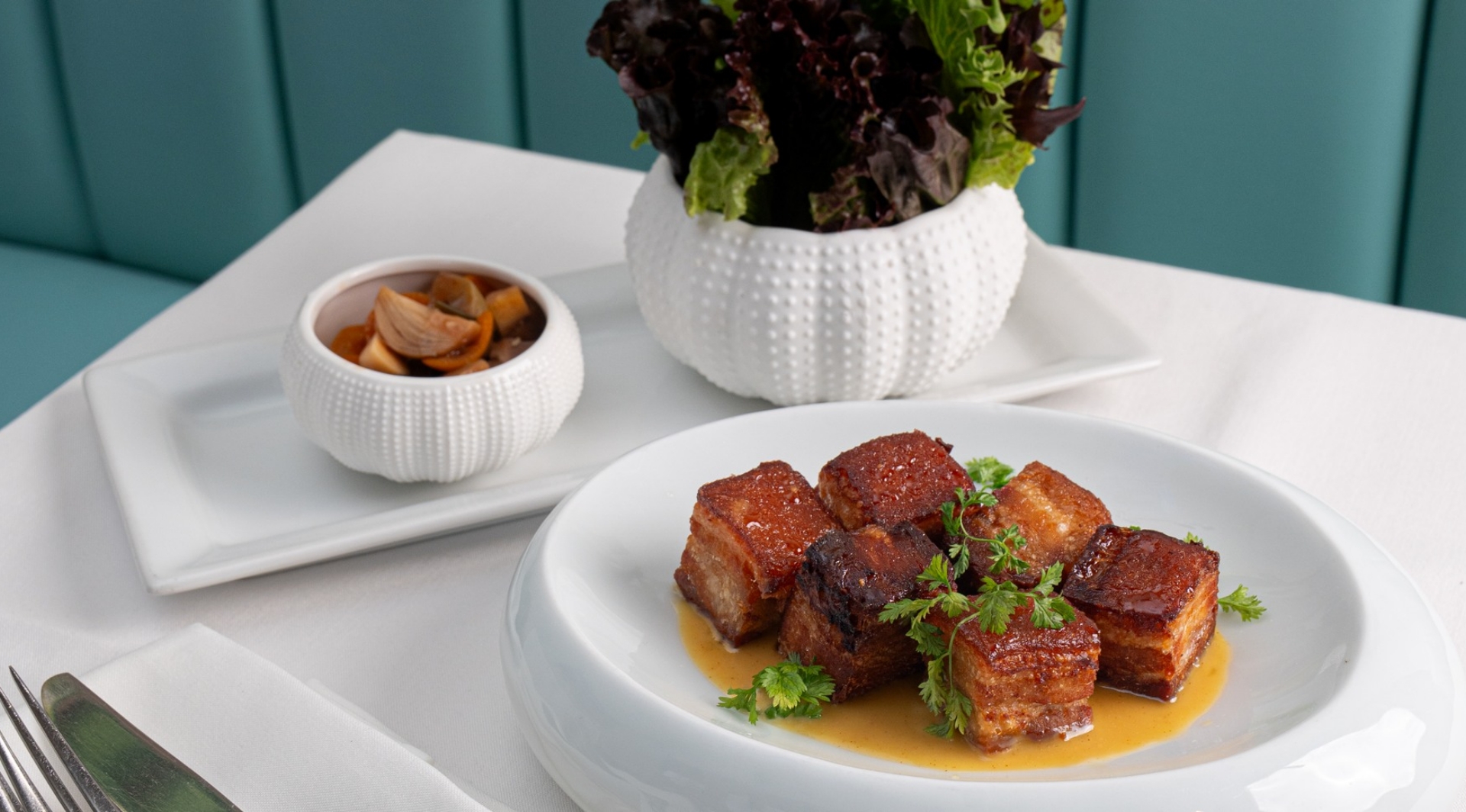
In Korea, Ssam Is More Than Wrapping Meat In A Leaf.
The word itself means “to wrap.” At the table, grilled meat, fresh leaves, sauces, garlic, peppers, pickles, and banchan are placed within reach. Each person chooses what to add, folds everything together by hand, and eats it in a single bite.
No two bites are exactly the same.
Someone adds more meat. Someone else more ssamjang. Some want garlic or chile. Others want something sharp and pickled.
The cook prepares the elements. The guest completes the bite.
That is what I have always loved about ssam.
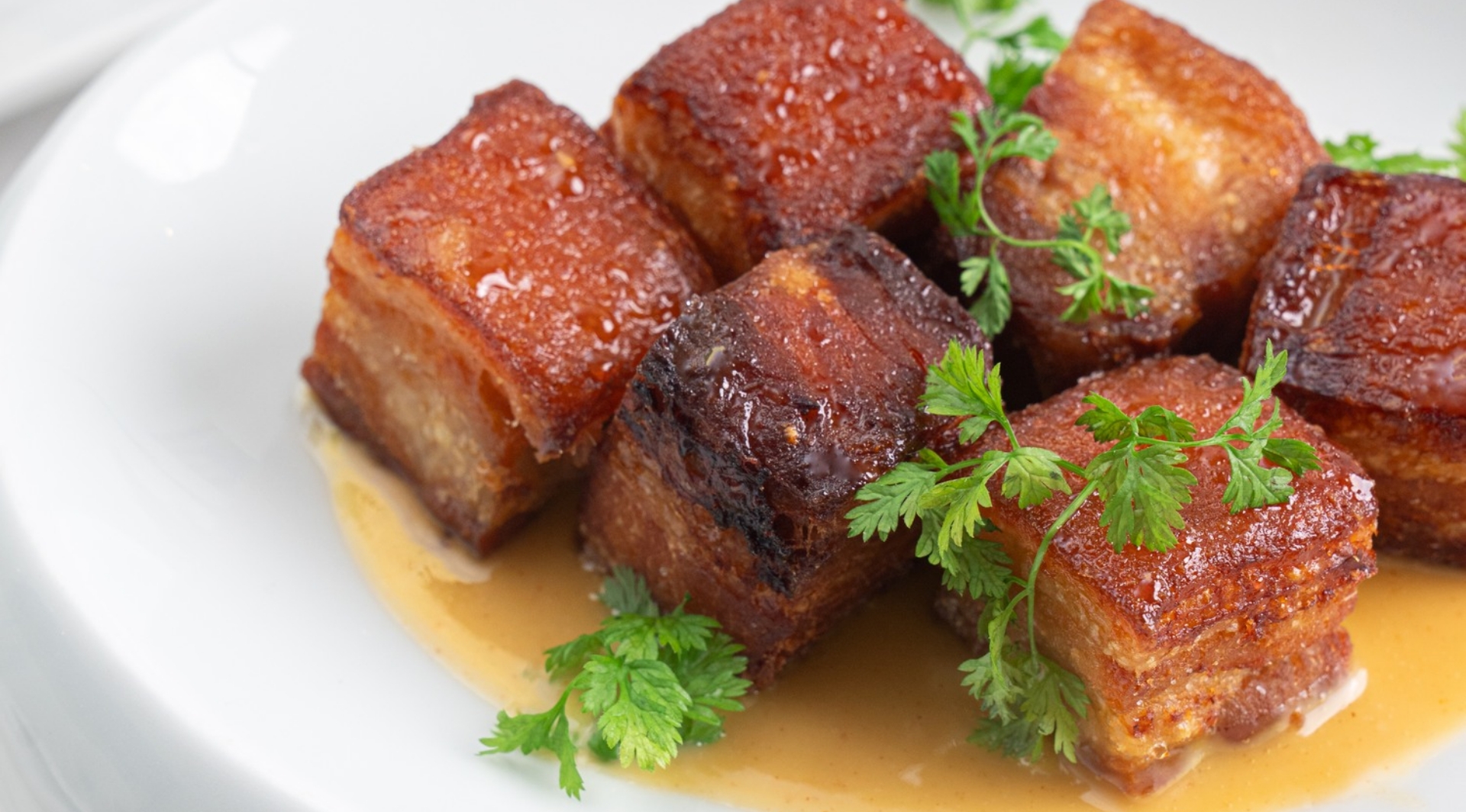
Twenty-four hours of slow cooking, followed by a crisp finish: the contrast at the center of the dish.
When I began developing Pork Belly SSAM for The Wild Artichoke, I did not want to simply reproduce traditional Korean barbecue.
I wanted to preserve the spirit of ssam while rebuilding each component through the way I cook today.
The center of the dish is pork belly.
Before cooking, the pork is brushed lightly with ssamjang — not enough to announce itself as a sauce, but enough to become the first, almost invisible layer of flavor.
Then it cooks slowly for 24 hours sous vide.
During that time, the fermented depth of the ssamjang settles into the pork and its fat. The guest may not immediately identify it as ssamjang. That is intentional.
“Good layering does not require every ingredient to announce its name.”
After cooking, the pork is chilled, portioned into bite-size pieces, lightly coated, and fried until the outside becomes deeply crisp while the interior remains exceptionally soft — almost creamy.
Crisp outside. Almost creamy inside.
“Good Layering Does Not Require Every Ingredient To Announce Its Name.”
After cooking, the pork is chilled, portioned into bite-size pieces, lightly coated, and fried until the outside becomes deeply crisp while the interior remains exceptionally soft — almost creamy.
Crisp outside. Almost creamy inside.
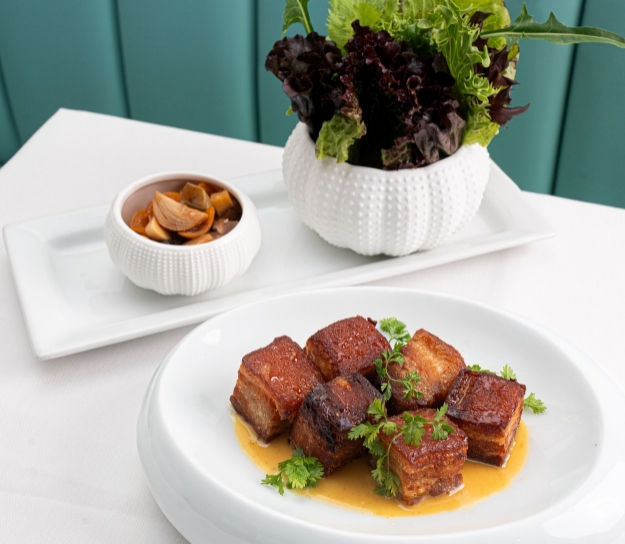
But pork belly alone does not make ssam.
A honey mustard vinaigrette brings acidity, gentle sweetness, and mustard heat to cut through the richness of the pork.
On top of each piece, a small touch of Moroccan lemon purée adds a concentrated flash of citrus. It is intentionally restrained — just enough to lift the richness before the next flavor arrives.
Then come the house pickles.
Kumquat, garlic, mini peppers, jalapeño, pearl onion, carrot, grapes, lotus root, and jicama are pickled to create different expressions of acidity, sweetness, heat, juiciness, and crunch.
They are not simply garnish. They reset the palate and give the guest another set of textures with which to build the next bite.
Finally, there are the leaves.
The guest chooses a piece of crisp pork belly, adds the pickles and accompaniments they want, folds everything into the lettuce, and completes the dish with their own hands.
There is technique behind the pork. There are flavors and textures drawn from different culinary experiences. But the heart of the dish remains something very old and very Korean:
bringing different things together, wrapping them by hand, and finishing them in one bite.
That is also why this dish expresses something fundamental about the way I cook.
I do not want flavors simply mixed together. I want them to build — richness, fermentation, crispness, acidity, citrus, heat, freshness — one layer supporting the next.
With this dish, I build most of those layers in the kitchen.
“I build the layers of flavor. The guest completes the final one.”
“I build the layers of flavor. The guest completes the final one.”
That final fold — made by hand, at the table — is what turns all of the individual elements into SSAM.
- CHEF ANDREW JOO